
We kicked things off with undoubtedly the most polarising – not to mention pervasive – topic discussed in the creative industries today. Artificial intelligence.
AI can generate polished visuals in seconds. It can parrot existing styles, produce variations, churn out ‘good enough’ or even ‘decent’ work at incredible pace. The bar for execution has dropped.
So what the hell happens to craft?
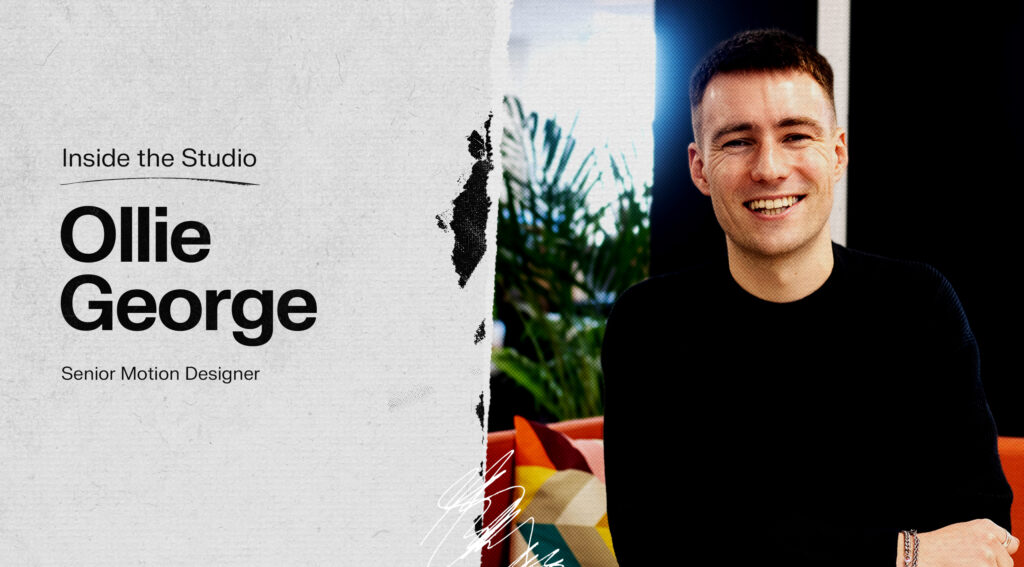
For Ollie, AI isn’t a crisis – or at the very least, there’s a silver lining to its dark, looming cloud: The ubiquitous spread of AI-generated content is pushing people to become more experimental in their own craft.
“There’s a lot of rehashing of similar kinds of things. People kind of get the gist of what AI is capable of now.
“There’s a definite backlash. People want to see something that feels like it’s been carefully crafted, curated, chosen. Something emotional.”
As AI visuals get more commonplace and more slick, people are starting to explore, diversify and further refine their own taste. A raw, handmade feel to things becomes a point of distinction.
“AI is good at churning out stuff that technically does the job. But work that really resonates with people – that’s obviously made by people, for people – that’s the exciting stuff.
“I feel like people are really craving that human touch. It just feels more important now.”
Built sideways
Ollie’s route into motion wasn’t linear. His first artistic outlet was music, largely self-taught. He started playing the guitar at seven. Later there were bands, then eventually DJ sets.
Around this time, he started designing posters for club nights, teaching himself Photoshop on a cracked copy so he could make the artwork feel as good as the sound. He’s still inspired by that grungy, underground scene today, citing artists like Weirdcore and their ability to create tactile yet surreal, immersive 3D landscapes.
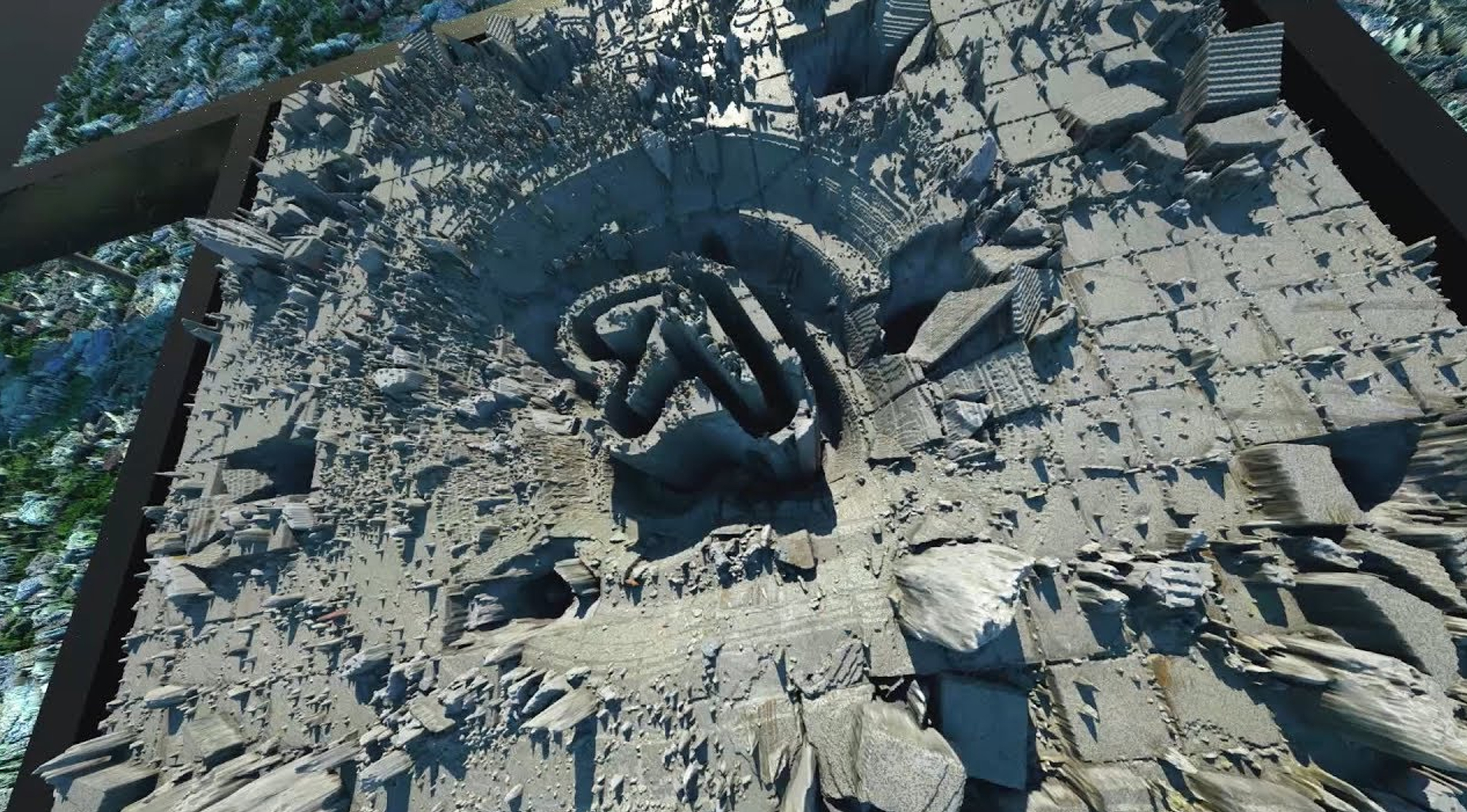
Ref: Video ‘T69 Collapse’ | Director ‘Weirdcore’ | Artist: ‘Aphex Twin’
Later, he started experimenting with ‘motion’ in Keynote in an honestly impressive, if a bit convoluted, process that involved stacking hundreds of layers to mimic true motion – all well before he ever opened After Effects.
“I just loved bringing things to life. Giving them energy.”
Figuring stuff out, or as he puts it “smashing things out in a state of hyperfocus” is a common theme for Ollie. So it’s no surprise when he states the hill he would die on for his discipline: never stop learning.
“In motion and design there’s always something new to figure out. If you’re just doing the same old thing, you’ll get left behind.”
He lights up talking about new software, 3D simulations and the sort of replicator effects that would’ve been unthinkable a few years ago. It’s clear he loves the technical side of motion, and its impact on the work.
“Just keep learning. It’s so important for your own sake – for your own enjoyment of what you’re doing, and for your ability to take pride in your work. You’re never done.”
The flow state test
Ollie’s mind is a bustling hive of ideas. He explains in the early stages of a project, everything feels possible. Then the deadline creeps in, and suddenly you have to choose. So, how do you figure out when an idea is the right one?
For him, it often comes down to a feeling.
“There’s a point where you hit a bit of a flow state. You’re just excited about where it’s going.”
That excitement, he explains, isn’t trivial. It’s usually a sign that something’s clicked. When people present work they’re genuinely invested in, that energy is infectious. You can tell when someone believes in what they’re showing you.
“The best work happens when you’re happy doing it.”
He felt that energy in his first week at Mr B, too. People in the office, hopping between spaces, ideas being tested in real time. “There’d be like four or five people crowded around a desk, then they’d all be running over to someone else’s desk saying ‘let me see this, show me that’. And that energy – it’s infectious.”
Pushing the edges
For any brand, standing out is hard. For Ollie, motion is one of the best ways you do it.
When a brand moves, you get a bit of elasticity. You can push things, exaggerate a quality or characteristic. Make an element feel like it has real weight, texture, personality.
“We shouldn’t be scared to push the boundaries of brand guidelines. Seeing how far you can take it without breaking it. There’s a lot of expression you can bring.”
Ref: Bath Rugby brand refresh by Mr B & Friends
Sometimes it’s subtle, like printing a logo into concrete in a 3D world just to make it feel solid and established. Other times it’s adding bounce and tactility, making a brand feel playful. The joy, he says, is switching between those worlds. Getting to choose and shape what you want a brand to say.
There’s no shortage of great work out there. Ollie cites DIA’s frenetic kinetic energy as one source of inspiration, alongside the high-end 3D visuals of Unseen Studio and the story-driven graphics from Crumb Studio. Their common thread: the unexpected. There’s surprise and delight in their work, no matter which brand they’re working with.
And if there’s one thing he’d love people to say about his own work?
“That it inspired them. That it pushed them a bit, made them feel something.”
At a time when machines can replicate almost anything, that feels like a pretty good ambition: Make motion with emotion. Make work that actually moves.